Listen to the new episode of the Clinical Trial Files podcast, where Karin Avila, Taymeyah Al-Toubah and Thomas Wood of Fast Data Science chat about AI and NLP in pharma, the Clinical Trial Risk Tool, what impact AI can make in clinical trials. This episode commemorates Alan Turing’s 113rd birthday on 23 June 2025.
The group chatted about how a team of data scientists together with clinical professionals can be much greater than the sum of its parts, and what traditional machine learning, statistics, and generative AI can achieve in the clinical research field.
Thomas Wood also discussed the thinking behind Fast Data Science’s flagship product, the Clinical Trial Risk Tool, and why and how this tool came to exist and how it’s helping clinical researchers validate protocols. Karin and Taymeyah told us about the exciting developments in AI that they are seeing in clinical research.
The Clinical Trial Files podcast is organised by Karin Avila, Taymeyah Al-Toubah, and Roberto Torres. You can listen below on Spotify:
You can find the Clinical Trial Files podcast episode on
Ready to take the next step in your NLP journey? Connect with top employers seeking talent in natural language processing. Discover your dream job!
Find Your Dream Job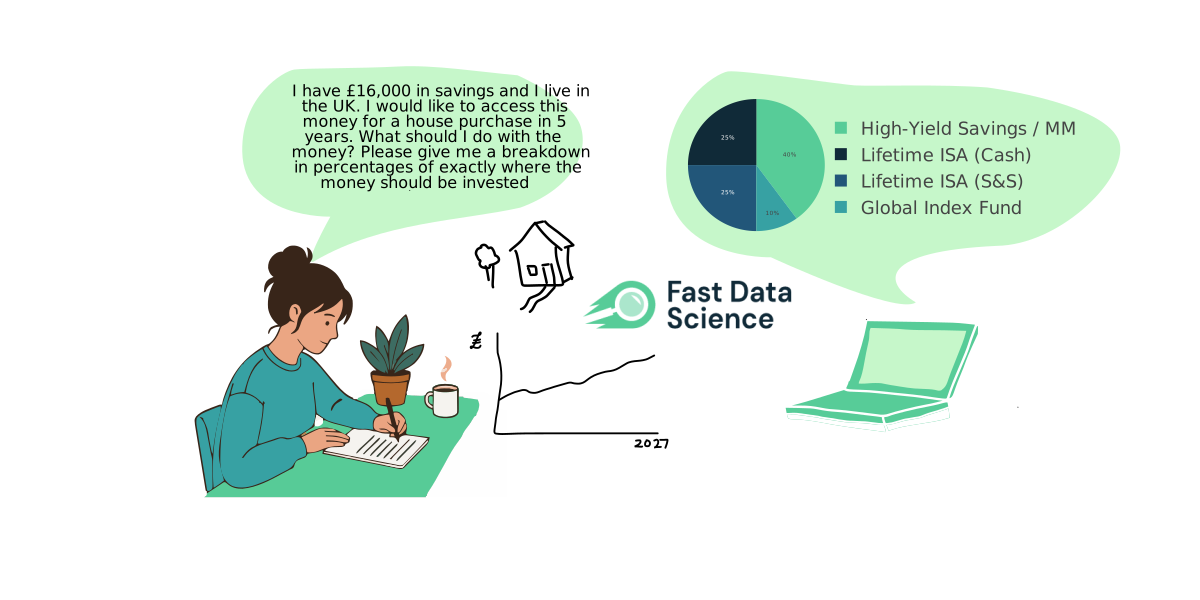
Financial advisors, like lawyers, are regulated in the UK. All financial advisors should be registered with the Financial Conduct Authority (FCA) and must have certain qualifications and have signed up to a code of ethics. UK financial advisors must also complete professional training every year.
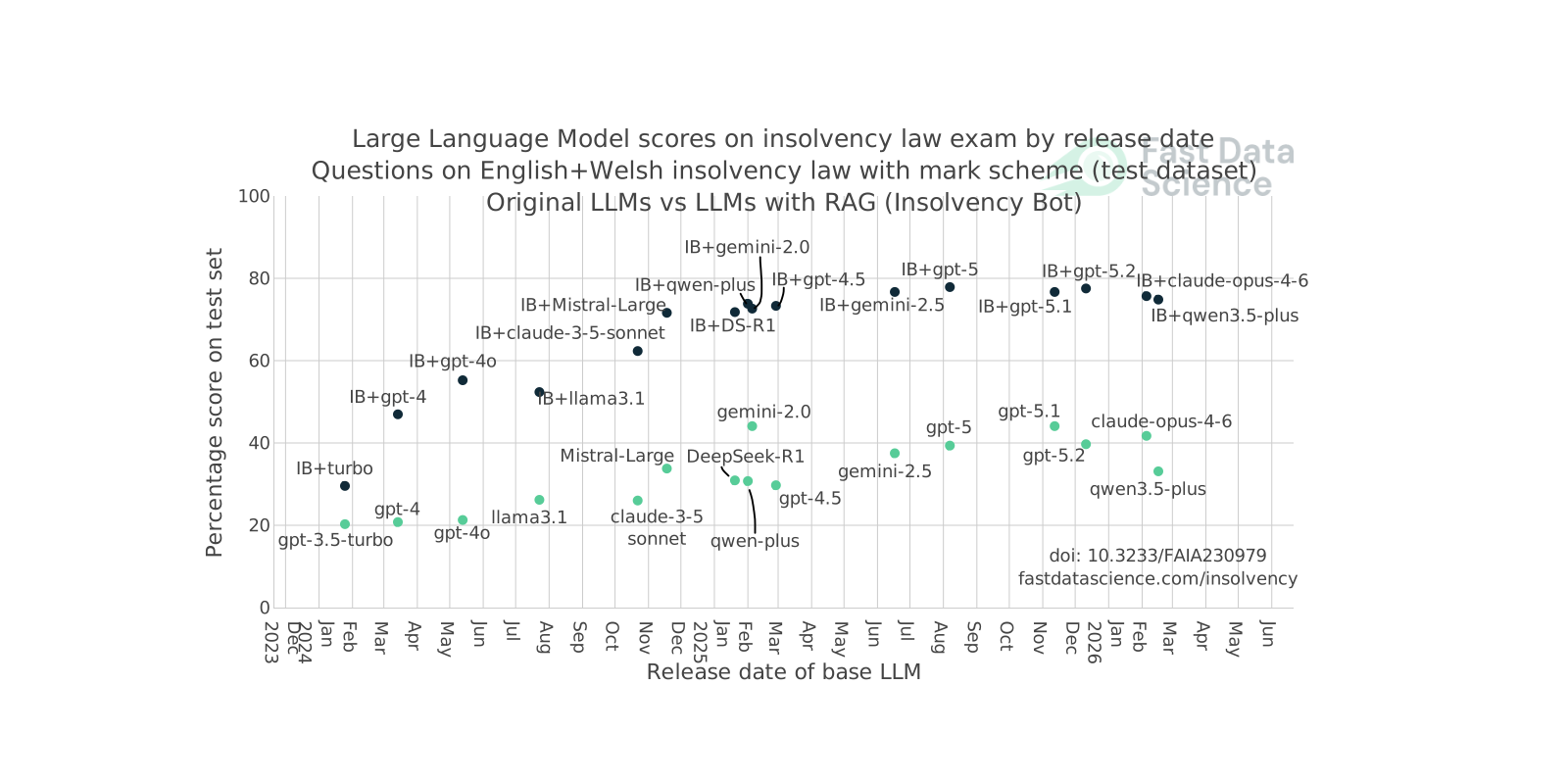
Which is the best AI for legal questions in 2026? We tested 16 Large Language Models (AIs) from the last two years on a law exam.

The effects of AI companies training on creative works When AI companies train models on text, video and images from creative industries, the end product is an AI model which can create near-human quality visual designs or copywriting. Many artists have argued the AI companies are exploiting creatives by profiting from their work, while the original creators do not receive any compensation. By flooding the market with low-cost content, AI has driven down rates for human artists, which is threatening creative careers.
What we can do for you