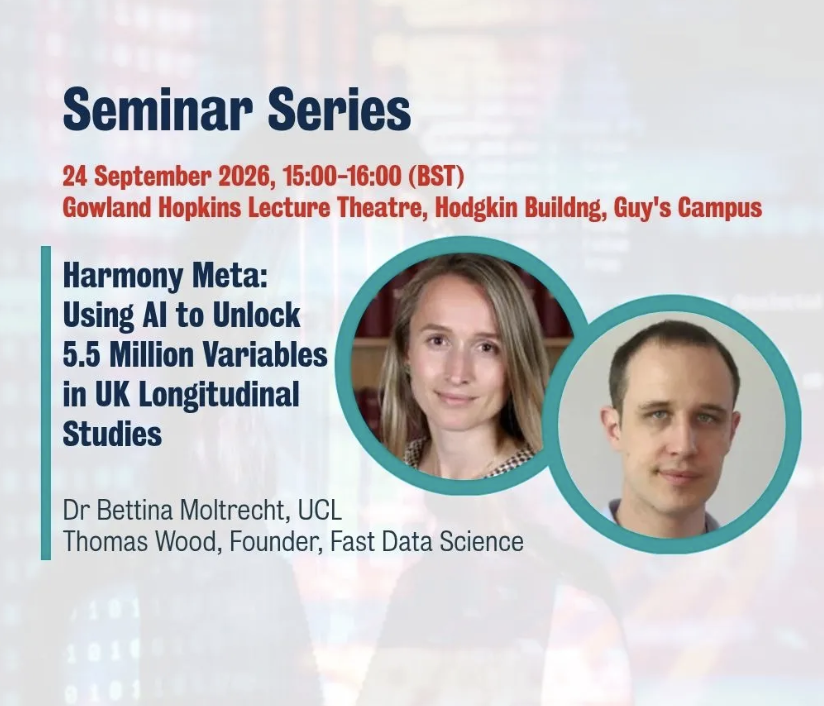
Above: video of Thomas Wood presenting Harmony at the AICamp meetup on 27 March 2024
Update: you can download the slides from the presentation here
Are you interested in how AI is transforming the field of social sciences research ? Do you want to learn about building your own research tools using open-source resources? You may be interested in the AICamp AI meetup, where Thomas Wood presented Harmony on 27 March 2024.
Natural language processing
Fast Data Science’s Thomas Wood showcased Harmony, an open-source AI tool specifically designed for social science research. Funded by the Wellcome Trust and built in collaboration with a prestigious consortium of universities, Harmony empowers researchers to leverage the power of NLP and AI in their projects.
Topic: Harmony, Open source AI tool for psychology research
Speaker: Thomas Wood (Fast Data Science)
Location: Cathedral View, Carlisle Place, St. Vincents Centre, London, SW1P 1NL
Date: 27 March 2024
Abstract: In this talk, Thomas discusses AI for social sciences research and how to build a research tool with NLP and AI with open source tool Harmony, funded by Wellcome Trust with Social Finance and developed with Ulster University, UCL and Universidade Federal de Santa Maria in Brazil.
Understanding AI in Social Science Research: Discover how AI can revolutionize the social sciences, unlocking new avenues for investigation.
Building with Harmony: Learn how to use Harmony, an open-source tool, to create your own research tools.
Joining open source project: Discuss how you can contribute to Harmony.
Hugo Bowne-Anderson from Outerbounds also presented about building GenAI and ML systems with OSS Metaflow.
Link to the meet up on AICamp’s website: **AICamp.
Fast Data Science is a leading data science consultancy firm providing bespoke machine learning solutions for businesses of all sizes across the globe. With a focus on innovation and collaboration, Fast Data Science empowers businesses to leverage the transformative power of data.
Ready to take the next step in your NLP journey? Connect with top employers seeking talent in natural language processing. Discover your dream job!
Find Your Dream Job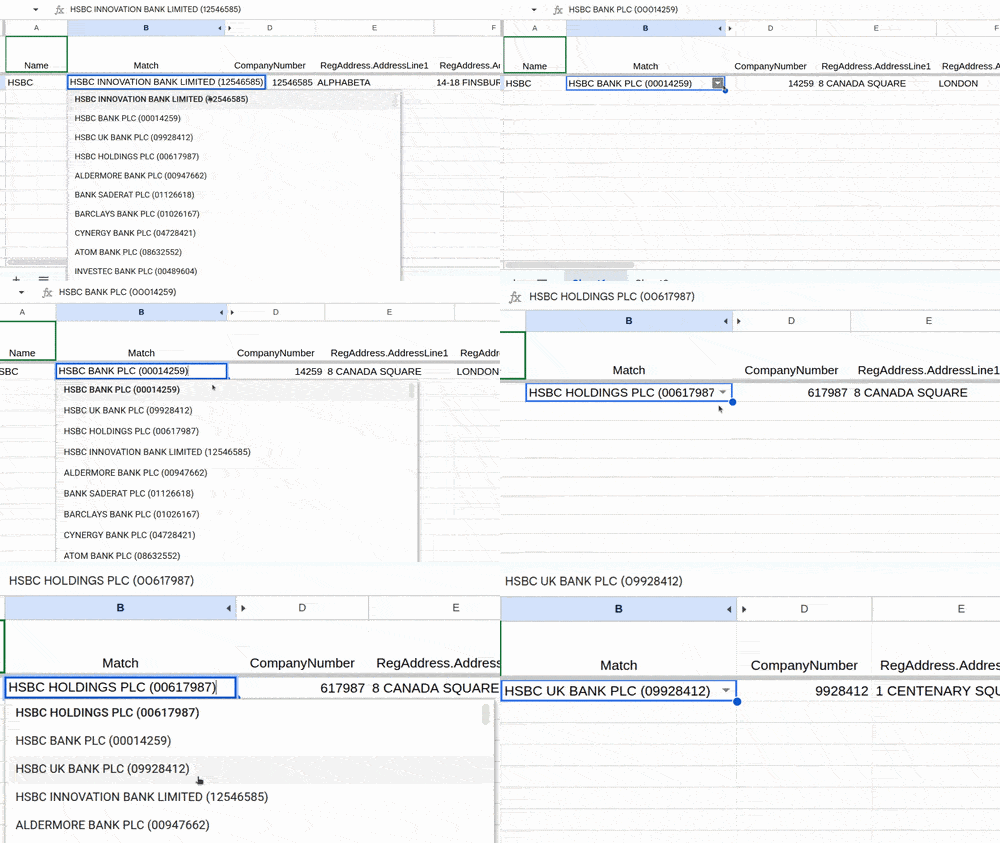
} Fast Data Science are pleased to announce we have updated the UK Company Details Google Sheets™ plugin. The plugin allows you to retrieve details such as company number, incorporation date, address, and directors’ details from Companies House (the UK company registry) and automatically populate them in columns of a Google Sheets™ spreadsheet.
We are all familiar with the general-purpose chatbots like Gemini, GPT, and Claude. Companies and organisations have also been creating internal and external facing special-purpose chatbots, such as those which can book flights, tell you the weather, answer healthcare related queries, or answer questions about government procedures.
What we can do for you