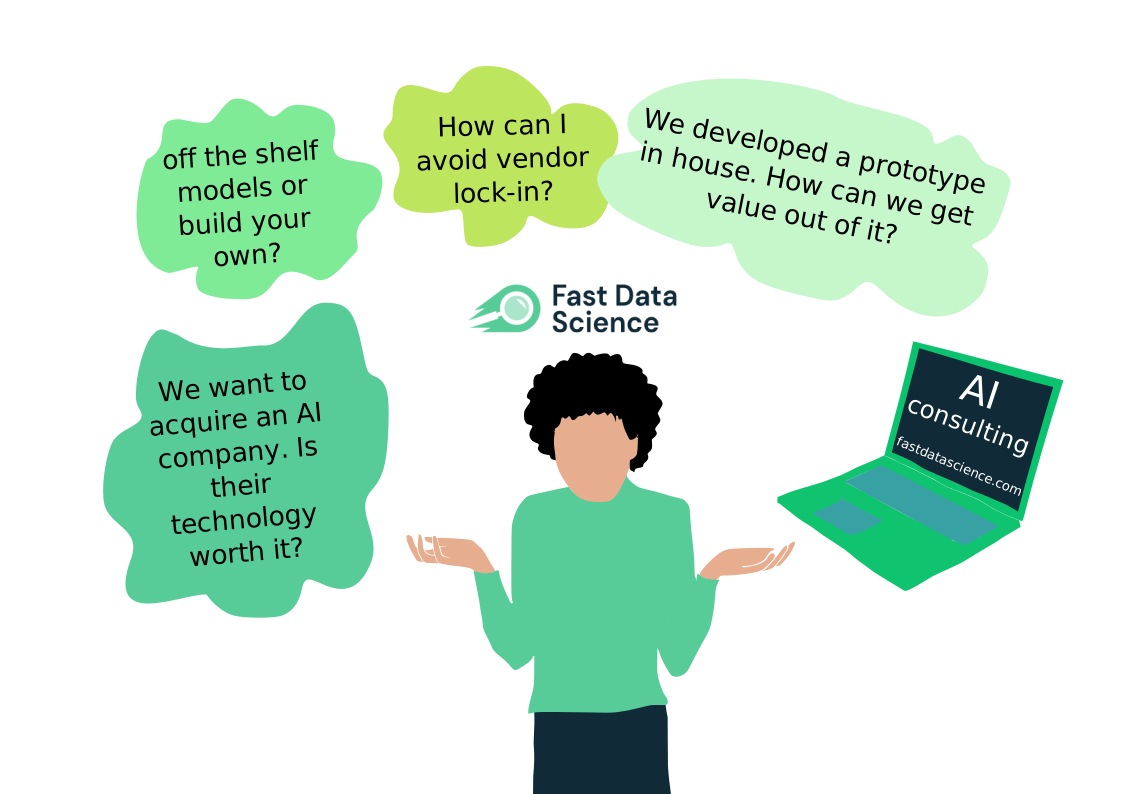
Unlock your business potential with expert AI consulting services from Fast Data Science. Discover strategies to accelerate growth and outperform competitors.
AI consulting is where an external consultant advises on, designs and implements artificial intelligence solutions for an organisation. This could range from hands-off advice via conference calls, to hands-on software development and AI model training and deployment.
An AI consultant is an external person hired by an organisation, who provides professional or expert advice and/or hands-on assistance in the field of artificial intelligence. The AI consultant can prioritise AI initiatives, they can pick up existing AI work that has been done in-house, bringing prototypes through to production, or they can manage and take responsibility for the entire process from start to finish, even joining your company on a retainer model as a semi-permanent chief AI officer.
An AI consulting partner guides businesses through the AI landscape, helping your organisation mitigate risks, understand data quality, stay on the right side of ever-changing AI regulation, and invest only in AI projects that will have a tangible return on investment, rather than prototypes that will gather dust.
Fast Data Science - London
AI is reshaping how companies operate, interact with customers, and make strategic decisions. With AI, we can analyse large amounts of data much more quickly than before. AI enables businesses to predict trends, optimize operations, personalize marketing efforts, and enhance customer experiences, driving growth and innovation.
An AI consultant’s role depends on how much AI related work has been done in your organisation. Most successful AI initiatives that we have seen in organisations fall into one of these two categories: reducing costs, or reducing risk.
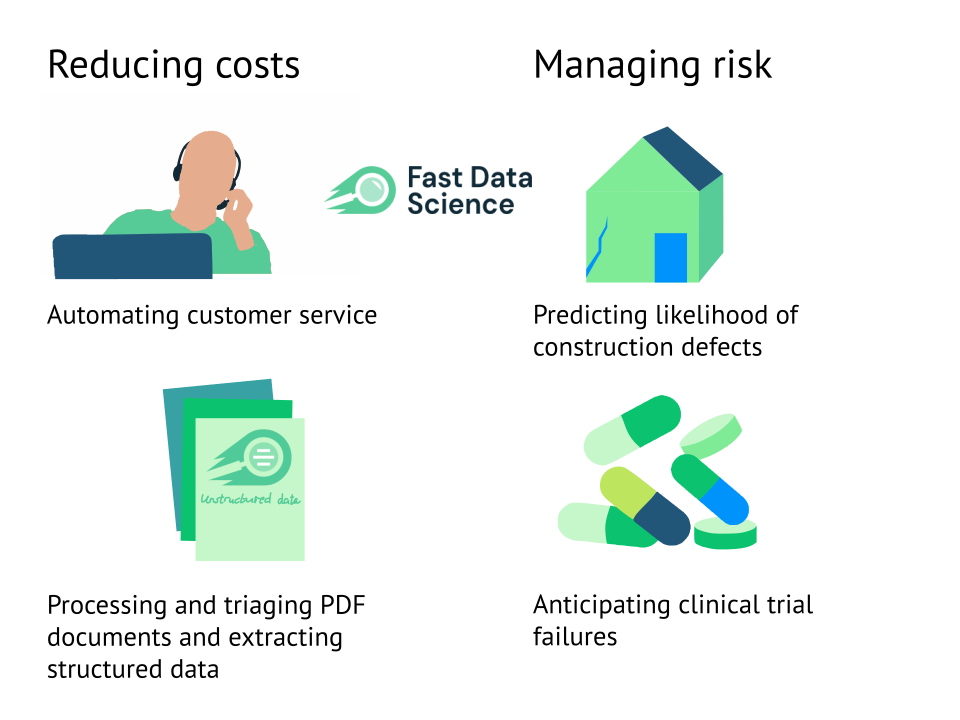
Here are some examples of what an AI consultant can do for your business:
| If your organisation is new to AI | If you have been using AI for some time |
|---|---|
| Identify and prioritise AI initiatives according to technical difficulty and potential ROI | Take your existing AI models and systems and assess them, and potentially take them over and improve them, working within your chosen technology stack. |
| Data health and infrastructure audit | Moving from proofs of concept to production systems. Deploying models to servers, which had previously only run on somebody’s laptop. |
| “Build vs. Buy” decision support (avoiding vendor lock-in) | Helping to transition from isolated tasks to agentic workflows |
| Data governance, risk and ethics | Advanced AI and data governance and “Day-2” operations |
| Change management and personnel training and upskilling, such as custom courses and workshops | Cost optimisation |
| Hands-on model training, and development, data annotation, and model deployment | Bridging the “AI Literacy” gap: helping train staff and middle management on use of AI. |
An AI consultant can also perform due diligence on existing AI solutions or even entire AI businesses. For example, Fast Data Science regularly takes on AI due diligence and even expert witness and expert advisor work for commercial litigation in the AI space. We can also help apply or draft applications for public sector tenders, Innovate UK grants, and other grant writing tasks.
You might also find that you need to hire the AI consultant on a retainer, or as a fractional chief AI officer or head of AI.
The main advantage of hiring an external AI consulting company like Fast Data Science is that you will have access to specialised knowledge and skills that may not be available in-house. AI consultants bring experience from various industries, and can offer insights into best practices, emerging technologies, and innovative solutions tailored to your company’s unique needs. For example, Fast Data Science has already conducted extensive work in pharma, healthcare, retail, finance, public sector, academic research, aviation, marketing and advertising, market research, and other industries.
It may be difficult to recruit a full-time employee with the necessary level of experience, whether technical experience, or industry experience, who can perform these tasks in-house, and you also may not have the budget. An AI consultant is often the most cost-effective way of accelerating AI adoption in your organisation.
An AI consulting firm will provide a strategic roadmap for AI integration, ensuring that your business can implement AI solutions effectively and efficiently. This includes everything from initial assessments and feasibility studies to deployment and ongoing support. By having a clear strategy, businesses can avoid common pitfalls and maximise the return on their AI investments. If necessary, the AI consulting partner can remain at arms-length from the development, focusing on strategy, or they can get hands-on.
Your AI consulting partner can also help with change management, including training and upskilling, ensuring that employees are on board and equipped to work alongside AI technologies.
If your organisation has not previously been using AI to any great depth, an AI consulting partner can assist with opportunity mapping and prioritisation. The AI consultant can help you identify high-ROI use cases that are specific to your industry. The potential AI initiatives can be plotted on an opportunity canvas (technical difficulty vs value to the company) which should enable the C-suite to identify the quick wins, which are technically simple to implement and bring a large return on investment. The AI consultant should also determine if your current problems are actually solvable with AI or if a simpler automation tool would suffice.

Above: An example opportunity canvas which could come out of an AI consulting engagement. Potential projects are plotted on a graph of technical effort versus value to the business. The sweet spot is the corner where a project is low technical effort and high ROI.
At the same time, the AI consultant can conduct a data health and infrastructure audit. AI is only as good as the data it’s fed. The AI consultant will perform a “Data Readiness Assessment” to see if your information is siloed, messy, or biased.
Selecting the right AI consulting partner is crucial for the success of your AI initiatives. The first step in this process is to evaluate the consultant’s expertise and experience. Look for a firm that has a proven track record in delivering AI solutions within your industry. Check their portfolio, case studies, and client testimonials and reviews to gauge their capabilities and understand the impact of their work on other businesses. A reputable AI consulting firm should have a team of skilled professionals with diverse backgrounds in data science, machine learning, and business strategy.
Another important consideration is the consultant’s approach to collaboration and communication. Effective AI projects require close collaboration between the consulting team and your internal stakeholders. The consultant should not be trying to sell ‘partnerships’ with any particular cloud provider or software company, but should be solutions and vendor agnostic and prepared to work with whichever technology you’re already using. If the consultant wants you to switch providers, they should have a good reason. Ask your consultant about vendor lock-in and how to avoid it.
The consulting firm should be willing to work closely with your team throughout the project lifecycle. Regular updates and clear communication are essential for addressing any challenges that may arise and ensuring that the AI solutions align with your business goals. We usually set up a weekly stand up meeting with our client’s internal team, or join an existing regular internal meeting as external participants.
Consider the scalability and flexibility of the AI solutions offered by the consulting firm. Your business needs may evolve over time, and it’s important to choose a partner who can adapt to these changes. Evaluate whether the AI solutions can be scaled to accommodate future growth and whether the firm offers ongoing support and maintenance services. A long-term partnership with a flexible and responsive AI consulting firm can provide continuous value and help your business stay ahead of the curve in an ever-changing technological landscape.
Several businesses have successfully used AI consulting services to drive growth and innovation.
Below you can see some examples of AI consulting projects which we have undertaken at Fast Data Science. You can find out more by reading our case studies. Click through the carousel below to see an overview of some of our interesting AI consulting engagements.
Fast Data Science joined the Harmony project as an external industry AI consulting partner. The academic partners on the project included University College London and Ulster University. We developed Harmony, an open source tool for harmonising questionnaire items. Try Harmony online.
Learn More
Foreflight provides a powerful mobile app used by commercial pilots for flight planning and in-flight naviation. It is an electronic flight bag which runs on iOS and iPadOS devices. As Foreflight's AI consulting partner, we analysed Foreflight's customer database to identify any users likely to churn (cancel their subscription).
Learn More
The Office of Rail and Road (ORR) is the British national rail regulator, responsible for health and safety on mainline rail, the London Underground, light rail, and trams.
Fast Data Science built a drag-and-drop dashboard which allowed internal users at the ORR to analyse data collected on train delays, flooding, accidents, construction, etc, and build machine learning models on the fly.
Learn MoreA Natural Language Processing-powered tool developed for the Bill and Melinda Gates Foundation, assisting experts in estimating the risk of a clinical trial ending uninformatively. The Clinical Trial Risk Tool also reads a clinical trial protocol and creates an itemised per-subject budget from the schedule of events, looking up costs in hospital charge masters. Try the Clinical Trial Risk Tool.
Learn More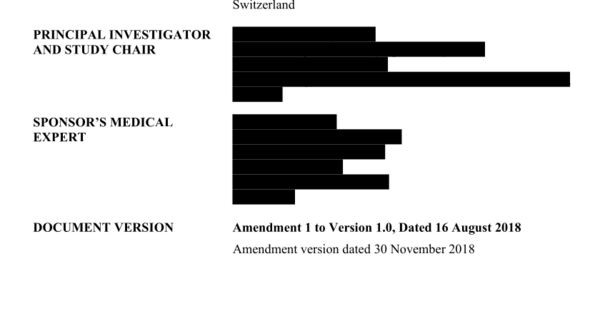
For a number of large pharma multinationals, we have been developing natural language processing models to redact sensitive data (PHI) or commercially sensitive information from clinical trial narrative reports, protocols, statistical analysis plans, synopses, ICFs, and other documents.
Learn More
Tesco is the UK's largest grocery retailer with over 15 million regular shoppers. We developed machine learning models to predict the amount in kilos that a shopper will put in their basket, as well as the turnaround time of delivery vehicles, in order to improve route optimisation and driver rostering.
Learn MoreMany times, we have come on board at a new company at the behest of the CEO or upper management and found that an employee has built and trained a series of machine learning models, and convinced the bosses that these models were worth the money spent on them, but the models have never left the laptop they were made on. If this happens, the company is not getting value from the AI models, no matter how accurate they are. Does this sound familiar?
Many companies find themselves in the “Pilot Trap”: they have dozens of successful small-scale experiments and proofs of concept (POCs) but no measurable impact on the bottom line. With AI consulting, your company can move from experimentation to industrialisation.
Once you’ve developed a model on your laptop, you’re only 25% of the way to having a fully functional deployed machine learning system. We can help your organisation escape the pilot trap. We will firstly identify if the proofs of concept are really effective, and secondly, we can bring them through to final deployment.
Fast Data Science has a particular focus on natural language processing, which is the area of AI that deals with processing information in human languages. If you are in an industry with large amounts of unstructured data stuck in documents, PDFs, audio files, scanned documents, or similar (such as pharmaceuticals, legal, or insurance), then you should definitely give Fast Data Science a call.
Above: an introductory video about natural language processing consulting at Fast Data Science.
As the market becomes crowded, it can be hard to choose the right AI consulting partner. There are “AI consultants” whose AI experience is limited to ChatGPT, who will set up a thin wrapper around a generative AI platform, and potentially charge a high fee. A solution like this is often overkill; many AI projects can be implemented without needing a generative AI platform, which can be slow, expensive, unsuitable for sensitive data, and prone to the AI company changing its terms or ceasing support for a particular model.
Ask your consultant if there’s an alternative that doesn’t involve generative AI. Check their credentials. Do they have experience outside of connecting up generative AI models? Are they aware of simple machine learning models, like linear regression and Naive Bayes classifiers? Will they jump straight to neural networks?
Ask your consultant to provide references and past case studies. Do they have any publicly deployed software or AI models that you can actually try out? Will the AI consulting firm send you a fresh graduate without any AI experience?
Your consultant should also not promise unrealistic levels of performance, like 100% accuracy. Ask them how they plan to measure the performance of their models. Do they use metrics like precision, recall, F-score and AUC, or do they appear blank when you mention these words? Do they plan to start with a benchmark dataset to measure the performance of algorithms, or will they just jump straight into training models and deploying them without quantifying performance in any meaningful way other than a “finger in the wind”?
Avoid any “AI consultants” who only recommend one platform (e.g., “We only do OpenAI” or “We are strictly a Google shop”). These are likely resellers in disguise, not a strategic partner. Big tech companies have partnership programs with incentives for consultants to push their products on their clients, perhaps with a year or two of free credits, until you’re locked in and it’s hard to change providers. The corresponding green flag would be a technology-agnostic approach. Your consultant should evaluate small language models, open-source vs. proprietary models, and on-prem vs. cloud based on your needs. A remote closed-source cloud-based solution should only be possible if you cannot achieve the results with open-source and free code, or if it’s significantly cheaper or has another major advantage.
A consultant which will charge you by the hour or day without any guarantee of results is also one to avoid. At Fast Data Science, we will quote you for a project with milestones, so you pay when the project is complete.
Despite the numerous benefits of AI, businesses often encounter several challenges when adopting these technologies. One of the primary obstacles is the lack of understanding and expertise within the organisation. Implementing AI requires specialized knowledge in data science, machine learning, and AI algorithms, which may not be readily available in-house. This skills gap can hinder the successful deployment and integration of AI solutions. Partnering with an experienced AI consulting firm can help bridge this gap and provide the necessary expertise.
Another significant challenge is data quality and availability. AI systems rely on large volumes of high-quality data to function effectively. However, many businesses struggle with data silos, inconsistencies, and incomplete data sets. Ensuring data accuracy, consistency, and accessibility is crucial for AI success. Businesses need to invest in data management and governance practices to address these issues. Additionally, working with an AI consulting firm can help identify and rectify data-related challenges, ensuring that the AI solutions are built on a solid foundation.
Change management and employee resistance can also pose challenges when adopting AI. Employees may fear that AI will replace their jobs or disrupt their workflows. It’s essential to foster a culture of innovation and emphasize the collaborative potential of AI. Clear communication, training programs, and involving employees in the AI implementation process can help alleviate concerns and ensure a smoother transition. By addressing these challenges proactively, businesses can maximize the benefits of AI and drive successful adoption.
Measuring the return on investment (ROI) of AI consulting services is essential for understanding the value and impact of these initiatives. One of the key metrics for evaluating ROI is cost savings. AI can automate repetitive tasks, reduce errors, and optimise processes, leading to significant cost reductions. Businesses should track the savings achieved through AI implementations, such as reduced labor costs, decreased operational expenses, and minimized waste. These cost savings can provide a clear indication of the financial benefits of AI consulting.
Another important metric is revenue growth. AI-driven insights can identify new revenue streams, enhance customer experiences, and improve sales through personalised marketing. Businesses should measure the impact of AI on their revenue generation, such as increased sales, higher customer retention rates, and improved customer lifetime value. These metrics can demonstrate the contribution of AI consulting services to the overall growth and profitability of the business.
Businesses should also consider non-financial metrics when measuring the ROI of AI consulting services. Improved operational efficiency, enhanced decision-making, and increased employee productivity are valuable outcomes that may not have a direct financial impact but contribute to long-term success. Surveys, feedback, and performance assessments can provide insights into these non-financial benefits. By evaluating both financial and non-financial metrics, businesses can gain a comprehensive understanding of the ROI of their AI consulting investments.
As an AI consulting relationship matures, the focus of the AI consulting partner will change.
| Feature | Early stage AI consulting | Mature stage AI consulting |
|---|---|---|
| Goal | Proof of Concept (PoC) | Scaling and industrialisation |
| Focus | Tool selection. Avoiding vendor lock-in. | System architecture and MLOps |
| Data | Data cleaning | Productising your data. Big data. Moving to data warehouses and data lakes. Planning a complete data architecture with robust ETL pipelines. Advanced technologies such as vector indices. |
| Risk | Ethics and bias basics. Informal risk assessments. | Regulatory compliance and liability. Managing certification by external bodies. HIPAA, GDPR |
| Metrics | “Cool factor” and user engagement | Focus on return on investment (ROI) and lifetime value |
AI consulting is constantly evolving, with new trends and advancements shaping the landscape. One emerging trend is the increased focus on ethical AI. As AI systems become more integrated into business operations, there is a growing need to ensure that these technologies are used responsibly and ethically. AI consulting firms are now offering services to help businesses develop and implement ethical AI frameworks, addressing issues such as bias, transparency, and accountability. This trend is crucial for building trust and ensuring that AI solutions are fair and equitable.
It is becoming more and more of a necessity to integrate AI technologies into business operations. If you don’t have the skills and experience in-house to achieve your AI goals, you should consider hiring external AI consulting services. If you choose the right external consultant, they will bring the strategic guidance and innovative solutions that you need to unlock business growth and stay competitive.
The case studies at Fast Data Science which I have listed above demonstrate the transformative potential of AI consulting across industries.
You should not lose sight of the ROI of hiring your external AI consulting partner. A good consultant will ensure that your projects stay on track and that you have the information necessary to assess the value and impact of these initiatives. By tracking cost savings, revenue growth, and non-financial benefits, businesses can gain a comprehensive understanding of the return on their AI investments.
As you take the next steps towards AI integration, remember that the journey is continuous. Stay adaptable, foster a culture of innovation, and leverage the expertise of AI consulting services to drive sustainable growth and success in an ever-evolving technological landscape.
Dive into the world of Natural Language Processing! Explore cutting-edge NLP roles that match your skills and passions.
Explore NLP Jobs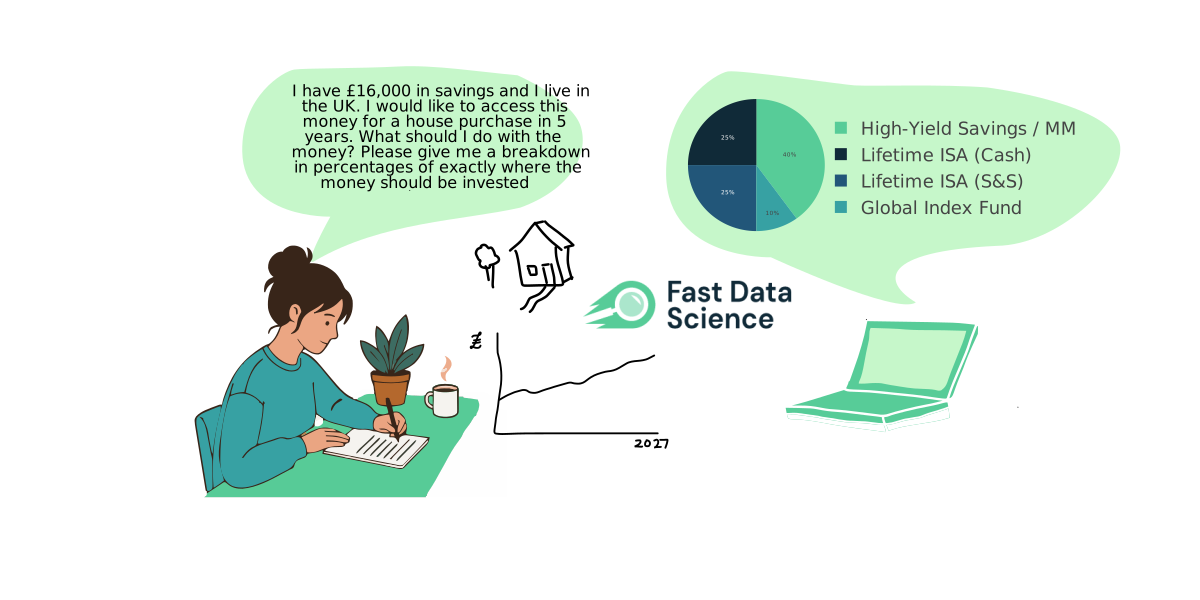
Financial advisors, like lawyers, are regulated in the UK. All financial advisors should be registered with the Financial Conduct Authority (FCA) and must have certain qualifications and have signed up to a code of ethics. UK financial advisors must also complete professional training every year.
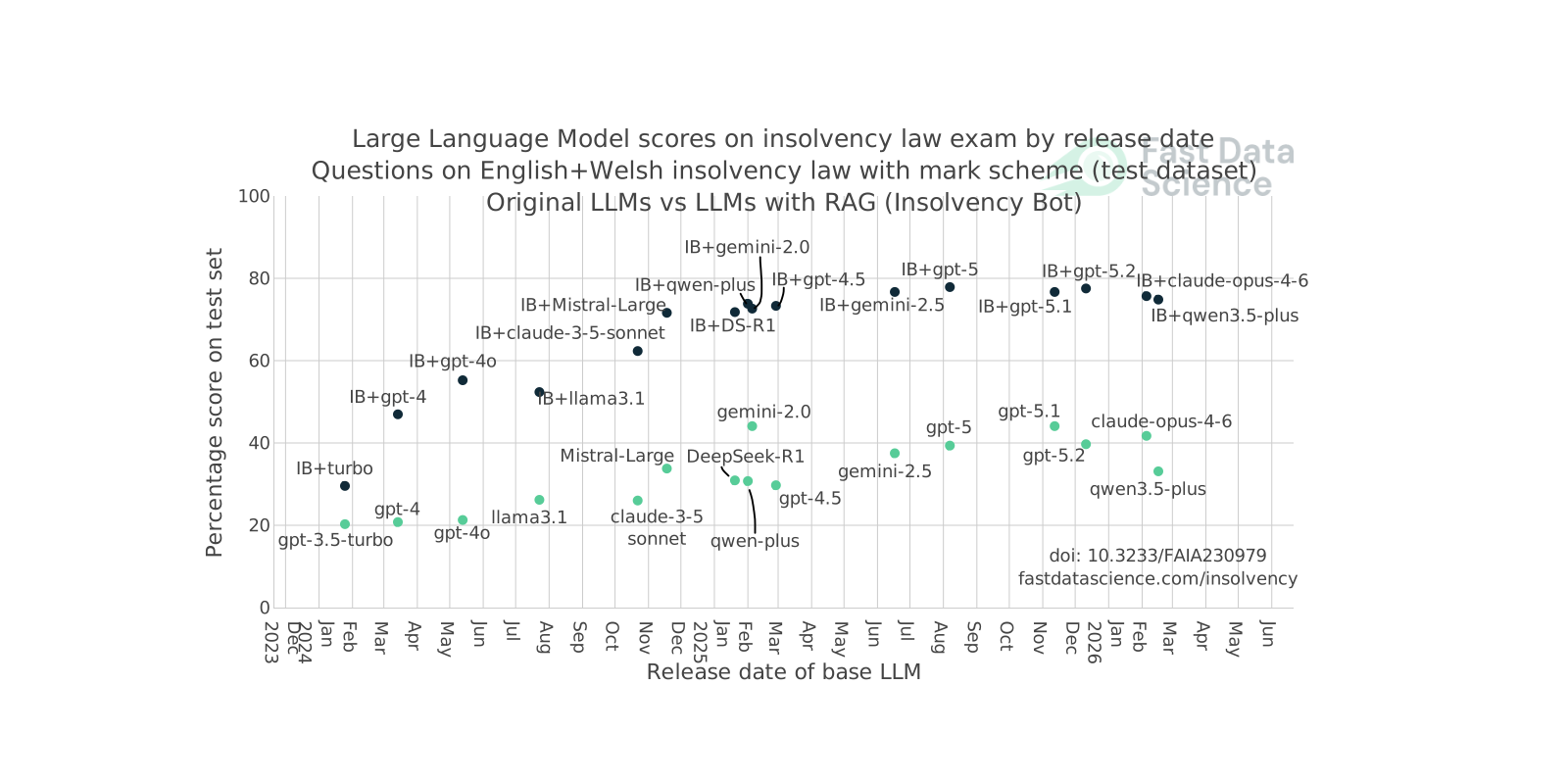
Which is the best AI for legal questions in 2026? We tested 16 Large Language Models (AIs) from the last two years on a law exam.

The effects of AI companies training on creative works When AI companies train models on text, video and images from creative industries, the end product is an AI model which can create near-human quality visual designs or copywriting. Many artists have argued the AI companies are exploiting creatives by profiting from their work, while the original creators do not receive any compensation. By flooding the market with low-cost content, AI has driven down rates for human artists, which is threatening creative careers.
What we can do for you