A machine learning consultant explains: Machine learning is a way of teaching software to do things using data, instead of just writing a computer program as a series of coded instructions (“if income < 10000, deny the loan”). Machine learning algorithms can improve automatically through experience.
The term “machine learning” covers different AI systems which can “learn” from past data and process new data and make predictions, classifications, and decisions. When a machine learning algorithm learns from data, we say that it is being trained. Machine learning is a sub-field of AI.
Machine learning algorithms build a model based on sample data, known as “training data”, in order to make predictions or decisions without being explicitly programmed to do so. Machine learning algorithms are used in a wide variety of applications, such as email filtering and computer vision. It is hard to write a robust set of rules to process incoming emails (e.g. if the email contains the word “accounts”, forward to Accounts), but machine learning would let you collect a set of emails in all the categories that you’re interested in, and train a model to learn the patterns.
A simple example of when you might want to use machine learning is the following: you have been tasked to predict the loading time of trucks for a grocery business. The last trucks had 10, 15 and 12 crates and took 8 minutes, 16 minutes, and 13 minutes to load respectively.
| Number of crates on truck | Loading time in minutes |
|---|---|
| 10 | 8 |
| 15 | 16 |
| 12 | 13 |
The machine learning solution to this problem would be to build a line of best fit.
Above: Scatter graph illustrating the process of fitting a linear regression model on vehicle loading times. It has axes: number of crates and time/minutes. To calculate the time for a hypothetical new truck with 14 crates, we can read off the line of best fitNow when the next truck comes along and it has 14 crates, you can predict a likely loading time of 14.92 minutes.
A machine learning consultant working in a real business will be dealing with much more complex relationships between numbers (for example, you may have different vehicle types, times of day, and crates of frozen goods vs fresh goods vs FMCG), and you would usually split your data into a training set and an unseen test set for validating your assumptions. Fast Data Science has built and deployed this kind of model in consulting engagements for retailers.
Nearly all recent breakthroughs in machine learning involve neural networks. These are machine learning models with many hidden layers, like in the illustration below. This field is called deep learning.
Generative AI is a specific application of deep learning where we are not just using machine learning models to predict things; they are also used to create things. This could include artistic creations like text and images which normally could only be done by humans.
Fast Data Science is a London, UK-based machine learning consultancy firm offering bespoke machine learning consultant services to organisations across industries. Our main area of focus is natural language processing (NLP).
The manager, Thomas Wood, studied a Masters in 2008 at Cambridge University in Computer Speech, Text and Internet Technology and since then he has been working exclusively as a machine learning consultant mostly in NLP.
In 2018, Thomas Wood founded Fast Data Science to deliver machine learning consultant services, focusing on NLP. We have built NLP pipelines from scratch, and worked on natural language dialogue systems, document classifiers and text based recommender systems. For these tasks we have used both traditional machine learning techniques as well as the state of the art such as neural networks and generative AI. We normally use Python but we are open to using any of your preferred technologies or cloud providers.
Machine learning can be used for tasks like
Fast Data Science’s machine learning consultant work is focused around natural language processing. Check our case studies for more information.
Fast Data Science - London
Today many companies, in particular in certain industries such as healthcare, pharmaceuticals, legal, and insurance, have large amounts of unstructured data. This is typically data in text format, which may even be unscanned documents, PDFs, HTML, or any other file type.
Unstructured data can be difficult to deal with but can contain a goldmine of information.
One way to process unstructured text documents with machine learning would involve first converting it from PDF or Word into a manageable plain text format (e.g. using Apache Tika), then passing it through an NLP pipeline which involves splitting it into tokens (words), and eventually converting it to numbers, possibly using a word vector embedding model. Once the document has been turned into a numeric format, it can be used to train a document classifier, or to pull information out. Generative AI can also help to answer advanced nuanced questions about a document.
When documents are large, we recommend to use traditional machine learning models such as Naive Bayes to identify the relevant part of a PDF, before doing any parts of the process with generative AI.
Recent advances in generative AI models allow us to request a structured output from a model such as the OpenAI API. In essence, if your PDF contains details like company earnings for different years before and after tax, you can request the generative AI to return a table of that information in a very structured fixed format. Without generative AI, it can be very hard to pull out the correct number in context from a document especially if that document contains multiple similar numbers in tables, and you don’t have control over the production of the document (e.g. although company financial reports follow a broadly similar pattern, each company uses their own distinctive template).
Before attempting to solve a problem with generative AI, I would recommend to attempt to solve it with the simpler traditional machine learning models first, such as linear regression or Naive Bayes, and quantify the performance. You can then know for certain if the generative AI improved your model’s accuracy and by how much.
For image files, computer vision models like convolutional neural networks (CNNs) are excellent for classifying images. If you have a small number of image classes and you want to classify incoming images as e.g. car vs motorbike, it’s quite straightforward to train an image classifier to handle the task. For more complex tasks, generative AI APIs may be useful, if speed and privacy constraints allow.
Fast Data Science’s machine learning consulting offering focuses on extracting value from organisations’ unstructured datasets using ML and NLP.
Below you can see some of the case studies that the machine learning consultants at Fast Data Science have completed:
Fast Data Science joined the Harmony project as an external industry machine learning consultant. The academic partners on the project included University College London and Ulster University. We developed Harmony, an open source tool for harmonising questionnaire items. Try Harmony online.
Learn More
Foreflight provides a powerful mobile app used by commercial pilots for flight planning and in-flight naviation. It is an electronic flight bag which runs on iOS and iPadOS devices. As machine learning consultants, we analysed Foreflight's customer database to identify any users likely to churn (cancel their subscription).
Learn More
The Office of Rail and Road (ORR) is the British national rail regulator, responsible for health and safety on mainline rail, the London Underground, light rail, and trams.
Fast Data Science built a drag-and-drop dashboard which allowed internal users at the ORR to analyse data collected on train delays, flooding, accidents, construction, etc, and build machine learning models on the fly.
Learn MoreA Natural Language Processing-powered tool developed for the Bill and Melinda Gates Foundation, assisting experts in estimating the risk of a clinical trial ending uninformatively. The Clinical Trial Risk Tool also reads a clinical trial protocol and creates an itemised per-subject budget from the schedule of events, looking up costs in hospital charge masters. Try the Clinical Trial Risk Tool.
Learn More
For a number of large pharma multinationals, we have been developing natural language processing models to redact sensitive data (PHI) or commercially sensitive information from clinical trial narrative reports, protocols, statistical analysis plans, synopses, ICFs, and other documents.
Learn More
Tesco is the UK's largest grocery retailer with over 15 million regular shoppers. We developed machine learning models to predict the amount in kilos that a shopper will put in their basket, as well as the turnaround time of delivery vehicles, in order to improve route optimisation and driver rostering.
Learn More
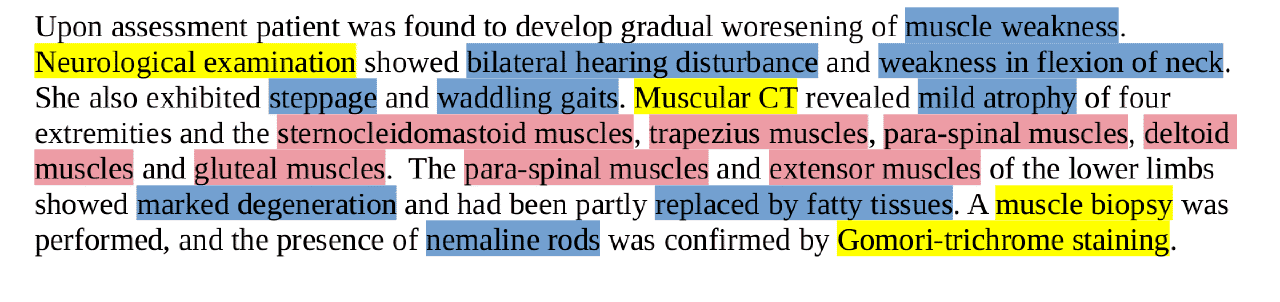
Machine learning is being increasingly adopted across the healthcare sector. This technology is sometimes called healthtech or MedTech.
Machine learning consultants can use AI to compare and detect changes in clinical reports, extract clinical concepts such as MeSH terms from electronic medical records, and develop human-to-machine natural language dialogue systems to improve the healthcare experience.
We have consulted on a number of machine learning projects in healthcare, including:
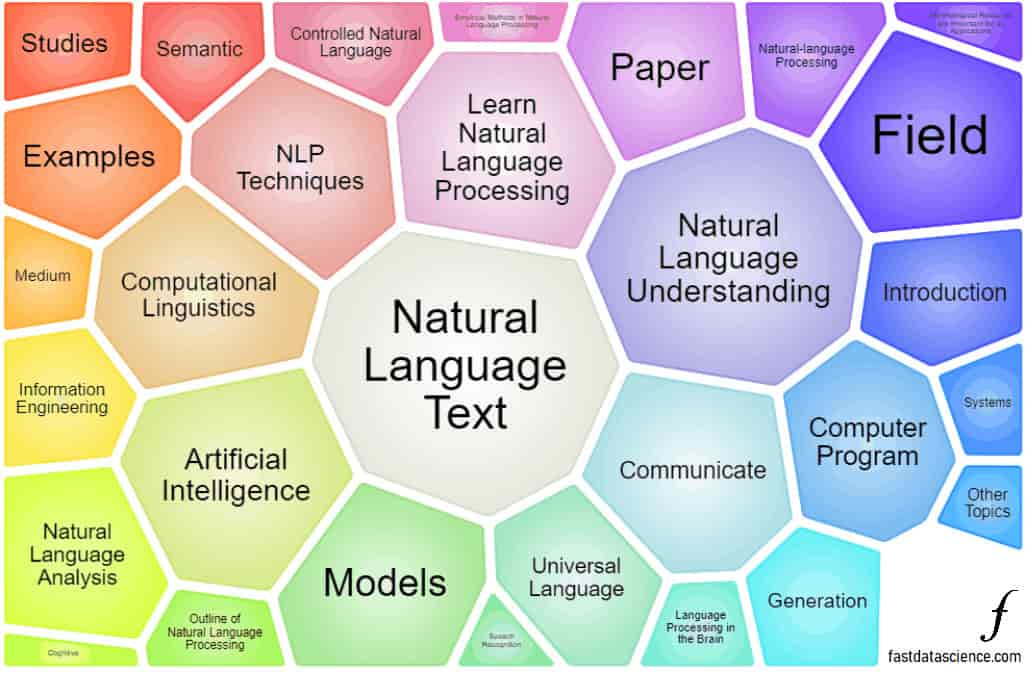
The machine learning consultants at Fast Data Science use mainly NLP models, including:
In our consulting work we are open to using any programming languages or frameworks, and we will happily adapt to your tech stack. We have worked with
We have even developed several publicly available open source NLP libraries.
We have consulted for major household names, and our machine learning projects include:
Fast Data Science is a leading machine learning consultant firm and can transform businesses through advanced AI and data-driven solutions.
Our machine learning consulting services deliver end-to-end support, from strategy to deployment, leveraging machine learning to unlock insights from complex datasets. We begin with workshops to pinpoint high-ROI projects, followed by data exploration and custom model development. Our machine learning consultants, skilled in NLP and predictive analytics, have built tools like the Clinical Trial Risk Tool for pharmaceutical clients, optimizing risk assessment.
As your machine learning consultants, we ensure seamless integration using cloud platforms of your choice, like Azure or AWS, addressing challenges like scalability and data privacy.
Founded in 2016 by Thomas Wood, with a Cambridge Masters in NLP, our team of machine learning consultants provides jargon-free, actionable results, enhancing decision-making across industries such as healthcare and legal. Our machine learning consultant services include training and visualisations for easy adoption, driving measurable impact.
What we can do for you