
There is ongoing debate around the question of whether AI can be used in court documents. A number of high profile cases have been reported where litigants, advocates, or expert witnesses have been admonished or even penalised by the courts for undeclared or inappropriate use of AI. In this blog post, I will focus on AI use in England and Wales, although I have covered some other jurisdictions in an earlier blog post on the topic.
On October 29, 2026, the UK’s Civil Justice Council, co-chaired by Sir Colin Birss and Mrs Justice Joanna Smith, published its Final Report on the Use of AI in Preparing Court Documents[1]. The report concluded that:
For legal representatives such as solicitors and barristers, AI use should be regulated by the regulators such as the Solicitors Regulation Authority. In other words, an advocate is already responsible under existing rules for anything that they submit to the Court, so the existing regulations should cover AI. Recent high profile cases such as Ayinde v Haringey[5] have shown that AI use by solicitors and barristers is a growing problem.
Some rules are urgently needed for the case of AI use by litigants in person, although litigants in person were out of the scope of the Civil Justice Council’s working group. This area clearly needs more attention, as we are seeing regular reports of inappropriate use of AI by litigants in person, wasting court time and incurring unnecessary costs.[3]
For witnesses of fact (not expert witnesses), witness statements should be accompanied by a declaration that the statement was not prepared with an AI tool that has generated or influenced its content. Spelling and grammar checks are allowed.
For expert witnesses, the Civil Procedure Rules should be updated to include new guidance on AI use.
Interestingly, the Civil Justice Council didn’t recommend that lawyers should be required to declare their use of AI, since they are already regulated by the relevant bodies such as the Solicitors Regulation Authority, and any court document is already the responsibility of the advocate who has prepared and submitted it. However, since witnesses, including expert witnesses, are not regulated, tighter rules are needed, both for witnesses of fact and expert witnesses.
The report draws a distinction between low-risk uses of AI, such as translation, transcription, and spelling and grammar checks, and uses of AI which involve the AI generating the substantive content of the document. The conclusion was that for lower risk uses, no further regulation is necessary.
The key risks of AI use for expert witness work in particular are:
hallucinations - AI is known to make up facts, e.g. stating that a child with special needs “has autism” (as in the Cornwall Council v M case that I describe below)
confidentiality breaches - you should not be putting sensitive information, such as medical notes, into an unregulated AI tool
misunderstanding of technical issues
The Civil Justice Council’s working group recommends that the Civil Procedure Rules should be amended to include a new requirement for a declaration concerning AI use “where such use generates or influences the substantive content of the expert’s report”. This declaration should include the AI tool in question, and the methodology used. The working group also recommended that the CJC’s Guidance for the Instruction of Experts in Civil Claims (2014) should be amended to introduce good practice guidance on AI use.
It is important to note that the Civil Justice Council’s recommendations are not in force yet - the working group has simply recommended changes to the rules around expert witness reports, but expert witnesses in England and Wales are still governed by the Civil Procedure Rules 35 and Practice Direction 35, as before.
The most recent comprehensive guidance that I could find on using AI as an expert witness is still the Academy of Experts’ Guidance for Expert Witnesses on the use of Artificial Intelligence[6]. This has a very helpful diagram drawing the distinction between low risk administrative uses of AI, such as spellchecking, transcription, and translation, up to higher risk uses where AI is used to generate the content of the report.
A recent children case, Cornwall Council v M[4], has shown the pitfalls of using AI to prepare court documents. An expert witness used Microsoft CoPilot, an AI tool, to compile her report and initially did not disclose the use of any AI tools.
Her submitted report (the assessment of two children’s needs) contained the following text
This wording keeps the tone balanced and analytical while clearly highlighting the changed circumstances since the earlier assessment.
This is clearly a feedback from the AI model to the user, which had been mistakenly pasted into the final submission.
The judge in the case said the tone of the report and use of language was very different to the witness’s tone and use of language. It turned out that the witness had used Microsoft Copilot to generate the report from her notes, transcribing conversations, and helping with grammar and spelling check, which would be a relatively high risk use of AI. There were other errors in the document, such as stating that a child “had autism” when this was not the case.
The judge pointed out the previous comments from the ruling in Ayinde v Haringey[5] and the Academy of Experts’ guidance[6], as well as the Family Procedure Rules Practice Direction 25[7], which govern expert evidence in family proceedings. The judge expressed concern that the AI tool appeared to have introduced inaccuracies, and remarked that there had been a lack of adequate human oversight in the preparation of the report.
A key takeaway from this is, we should not be using AI to summarise notes or prepare the content of a report. If you are writing something for the court, the judge wants to hear from you, not the AI tool.
In R v FGD[8], a rape trial, the complainant was found to have given an AI model a summary of her account and used it to generate cross-examination style questions and suggested answers. The suggested answers appeared to be designed to help the witness present a consistent account of her evidence.
The judge ruled that the AI interaction amounted to witness coaching and halted the trial - although the Court of Appeal later disagreed and allowed the trial to continue.
The Court of Appeal’s ruling shows that the use of AI does not necessarily amount to witness coaching. If the complainant had only used AI to help her understand court procedures, that would have been permitted, as it would have fallen under witness familiarisation. However, the fact that she used AI to generate questions and responses, the AI use moved beyond witness familiarisation into witness coaching. So we should be careful even using AI to prepare for a court appearance.
I would personally limit all AI use to spellchecking and grammar checking, and possibly transcription. Document summarisation in research would be acceptable under some circumstances. No word that appears in the final report should come from AI. In particular, hallucinated citations have been a common way that illicit AI use has been discovered.
If you must use AI for your report, you should keep a log of which AI tool you have used, and all of the inputs and outputs, i.e. your methodology.
Remember, that in a court hearing, the opposing side will look for weaknesses in your expert evidence. Don’t let your AI use, especially undeclared AI use, be a potential point of attack.
Civil Justice Council, Use of AI for Preparing Court Documents: Final Report, chaired by Sir Colin Birss PBPD, 29 October 2026.
Cornwall Council v M & Ors [2026] EWFC 306 (30 September 2026), https://www.bailii.org/ew/cases/EWFC/HCJ/2026/306.html
Bianca Castro, AI use by litigants in person creates demands on court, lady chief justice warns, Law Gazette, 6 November 2026.
Cornwall Council v M & Ors [2026] EWFC 306 (30 September 2026)
R. (on the application of Ayinde) v Haringey LBC, [2025] EWHC 1383 (Admin)
Academy of Experts: Guidance for Expert Witnesses on the use of Artificial Intelligence (AI). January 2026. https://taecdn.b-cdn.net/wordpress/wp-content/uploads/2026/02/fs-26-01-AI.pdf
Family Procedure Rules, Practice Direction 25, https://www.justice.gov.uk/courts/procedure-rules/family/parts/part_25
R v FGD ([2026] EWCA Crim 918)
Looking for experts in Natural Language Processing? Post your job openings with us and find your ideal candidate today!
Post a Job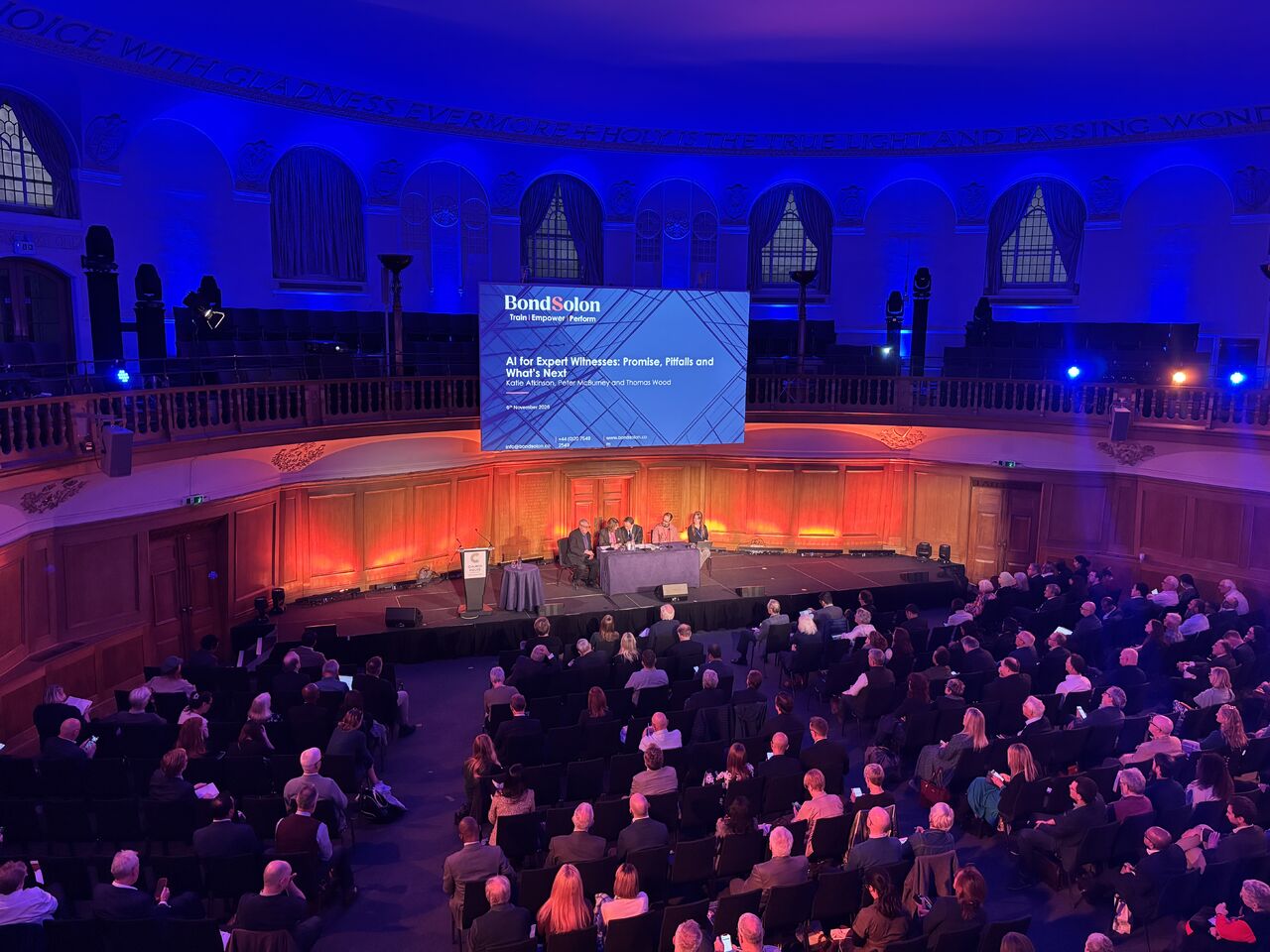
Thomas Wood, director of Fast Data Science, appeared today as a panelist at the Bond Solon Expert Witness Conference on 6 November 2026 at Church House, Westminster in London. This follows Thomas’s appearance at the Ireland’s Expert Witness Conference on 20 May 2026.
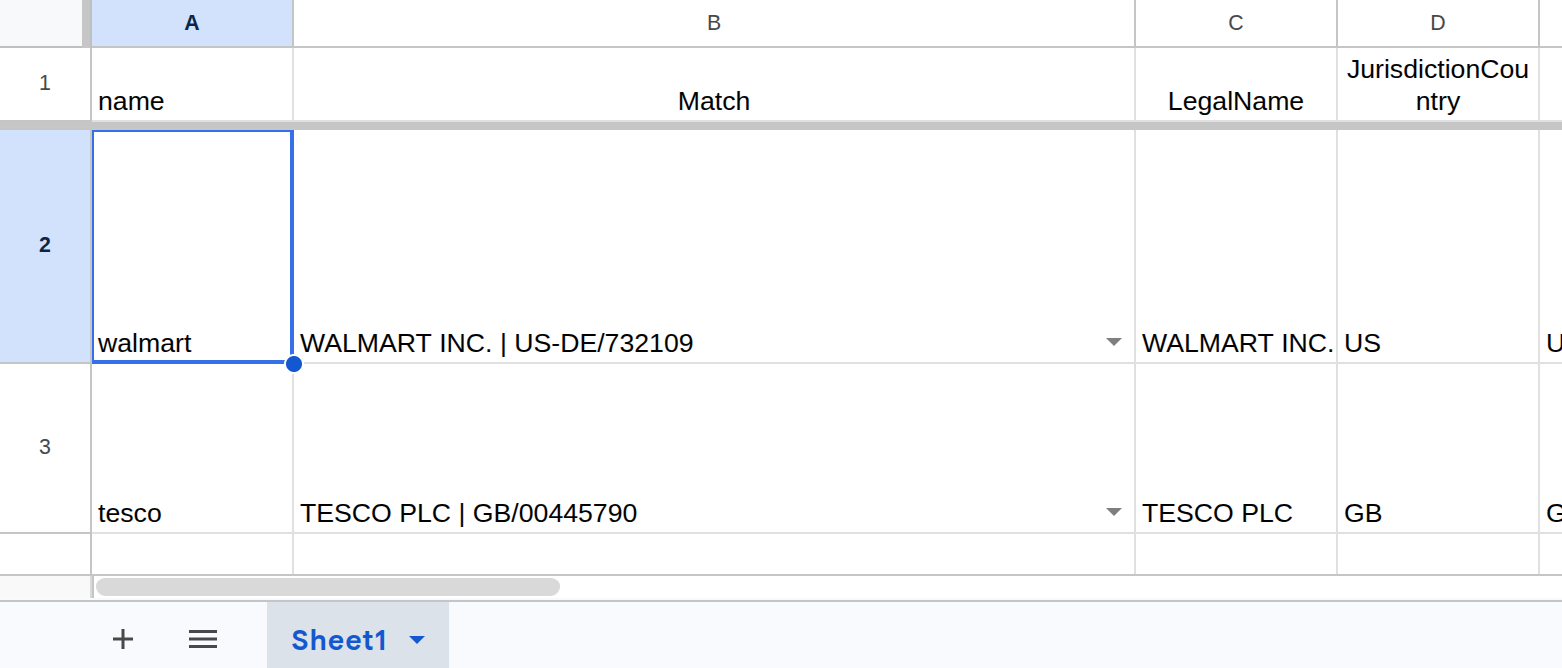
Global Company Data Google Sheets™ plugin Do you need to look up key information about international companies and all you have is the company name and possibly the country?
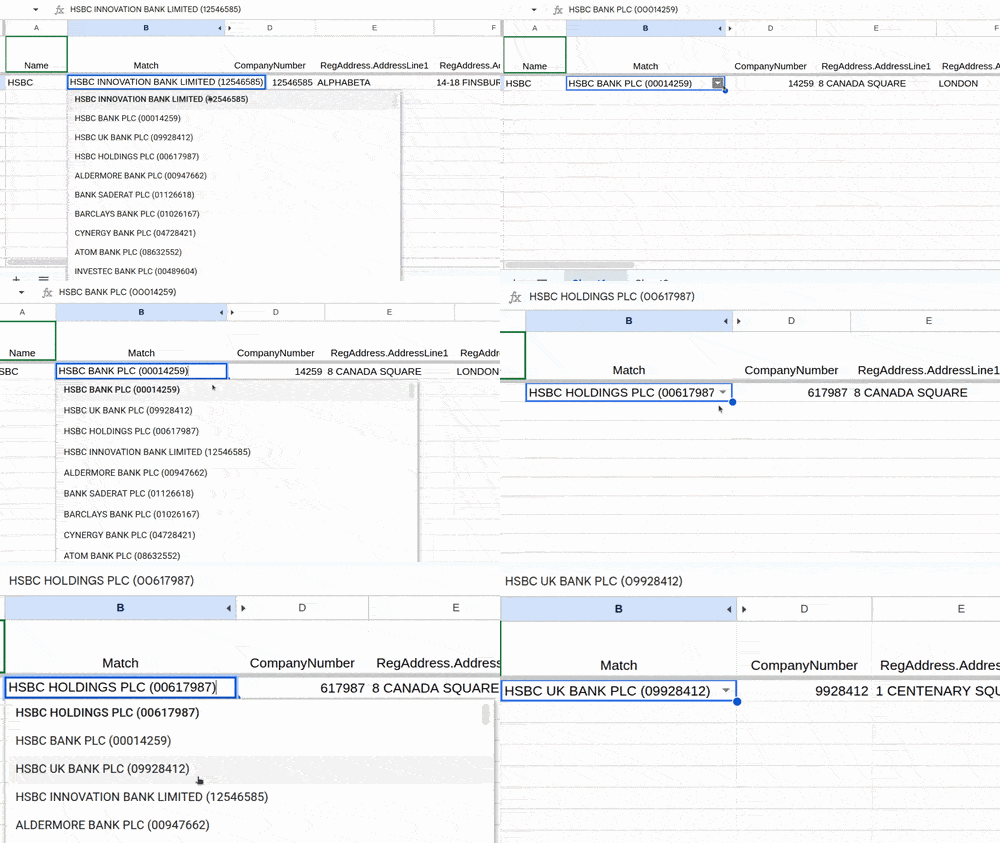
} Fast Data Science are pleased to announce we have updated the UK Company Details Google Sheets™ plugin. The plugin allows you to retrieve details such as company number, incorporation date, address, and directors’ details from Companies House (the UK company registry) and automatically populate them in columns of a Google Sheets™ spreadsheet.
What we can do for you
