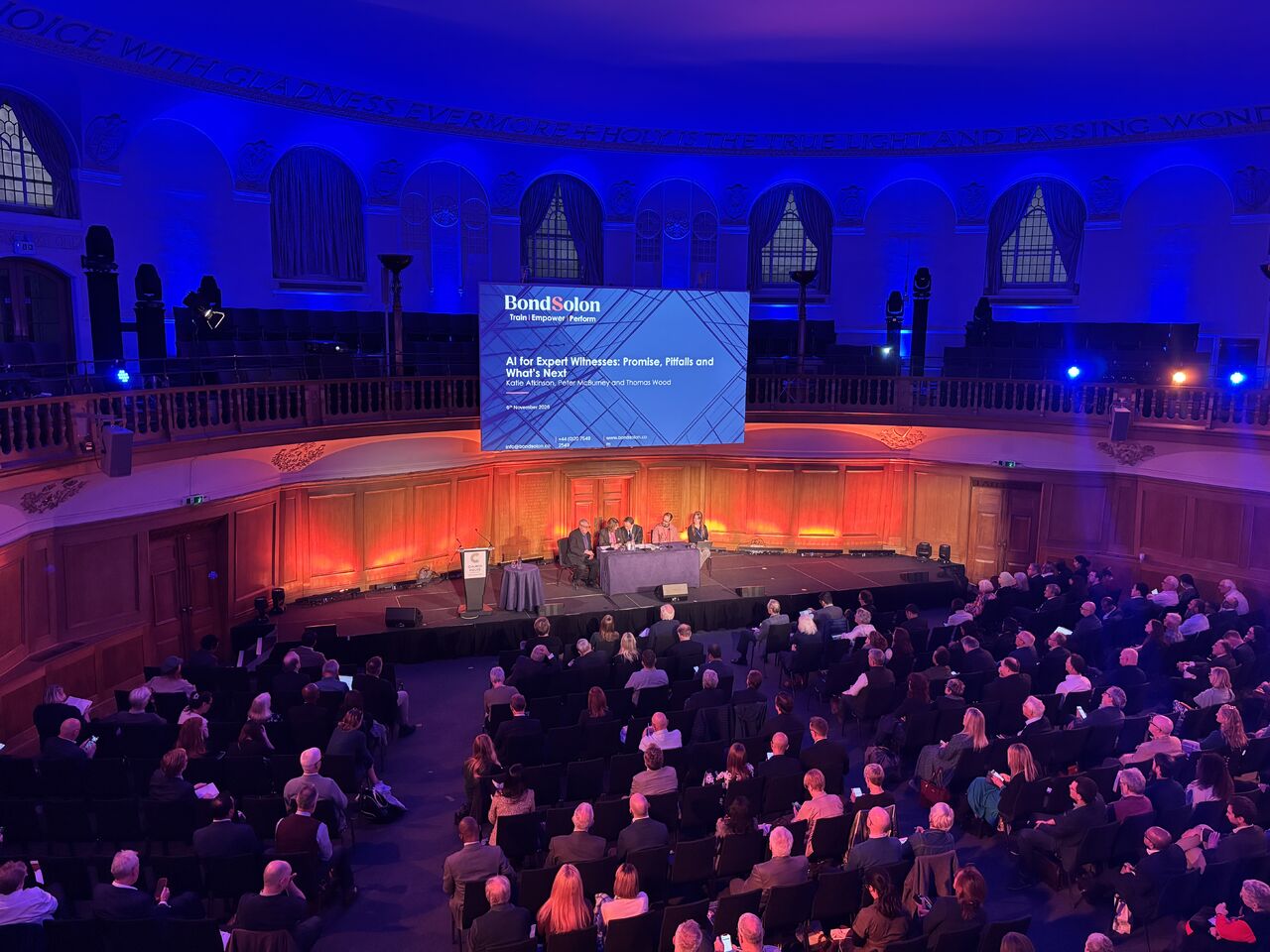
Thomas Wood, director of Fast Data Science, appeared today as a panelist at the Bond Solon Expert Witness Conference on 6 November 2026 at Church House, Westminster in London. This follows Thomas’s appearance at the Ireland’s Expert Witness Conference on 20 May 2026.
The Bond Solon Expert Witness Conference is the largest annual gathering of expert witnesses in the UK, providing a vital forum for discussing standard practices, landmark rulings, and the future of legal expertise.
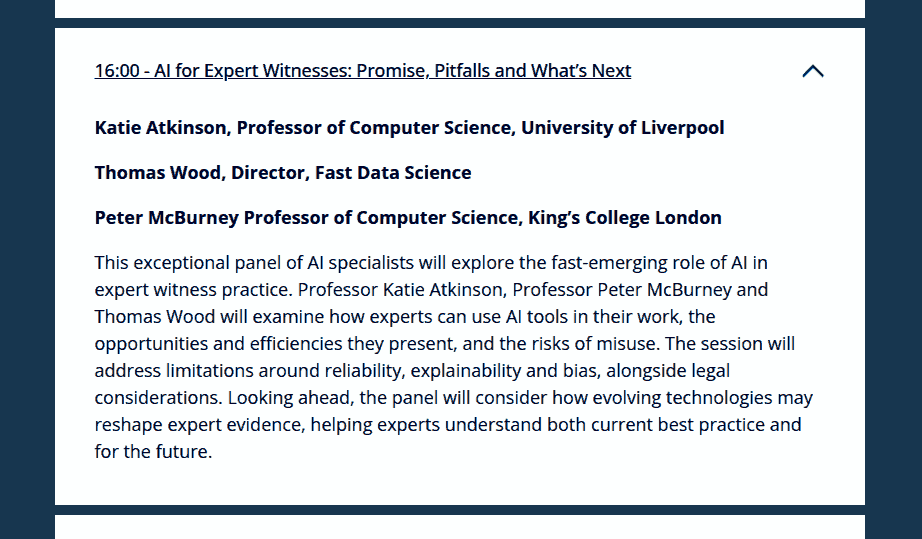
The panel was chaired by Mark Solon, founder of Bond Solon, and consisted of panellists:
Katie Atkinson, Professor of Computer Science, University of Liverpool
Thomas Wood, Director, Fast Data Science
Peter McBurney, Professor of Computer Science, King’s College London

Panel at the Bond Solon Expert Witness Conference 2026. Left to right: Peter McBurney, Kate Atkinson, Mark Solon and Thomas Wood
The panel discussed how the rapidly changing landscape of AI is affecting expert witness practice. Mark Solon chaired the panel and put questions to the panellists, such as how expert witnesses can use AI in practice, as well as fielding questions from the audience.
Speakers at the conference included:
Hon. Mrs Justice Joanna Smith KC DBE
Emma Price, counsel on the Post Office Horizon IT Inquiry
Mark Solon, founder of Bond Solon
The panel followed a very informative keynote speech by The Hon. Mrs Justice Joanna Smith KC DBE, who covered the changes in the latest guidance to AI in court submissions, such as the recommendations from the Civil Justice Council working group[1].
Emma Price, a barrister at 5 Essex Chambers, gave an overview of learnings from the Post Office Enquiry and the flaws in the expert evidence given in that enquiry, and took audience questions about the enquiry and origins, causes, and consequences of the Post Office scandal.
We also learned about moves to restrict unregulated psychology experts from giving evidence in children cases in the family courts. Dr Amy Wilson, lecturer in Applied Statistics and Chair of the Royal Statistical Society’s Statistics and the Law Section, gave an overview of many key cases where statistics have been misused or misunderstood, from the Prosecutor’s Fallacy to high profile cases that hinged on interpretations of statistics.
Dive into the world of Natural Language Processing! Explore cutting-edge NLP roles that match your skills and passions.
Explore NLP Jobs
No part of this blog post constitutes legal advice. A common question that came up at the two expert witness conferences which I attended in 2026, was

There are a number of unresolved questions around when and how AI can be used in court documents. A variety of cases have been reported where litigants in person, advocates, or expert witnesses have been admonished or penalised by the courts for undeclared or inappropriate use of AI. In this post, I will focus on AI use in England and Wales, although I have covered some other jurisdictions in an earlier blog post on the topic.
What we can do for you