On 20 May 2026, La Touche Training is running the Expert Witness Conference 2026, at the Radisson Blu Hotel, Golden Lane, Dublin 8, Ireland. This is a full-day event combining practical workshops and interactive sessions, aimed at expert witnesses and legal professionals who want to enhance their expertise. The agenda covers critical topics like recent developments in case law, guidance on report writing, and techniques for handling cross-examination.
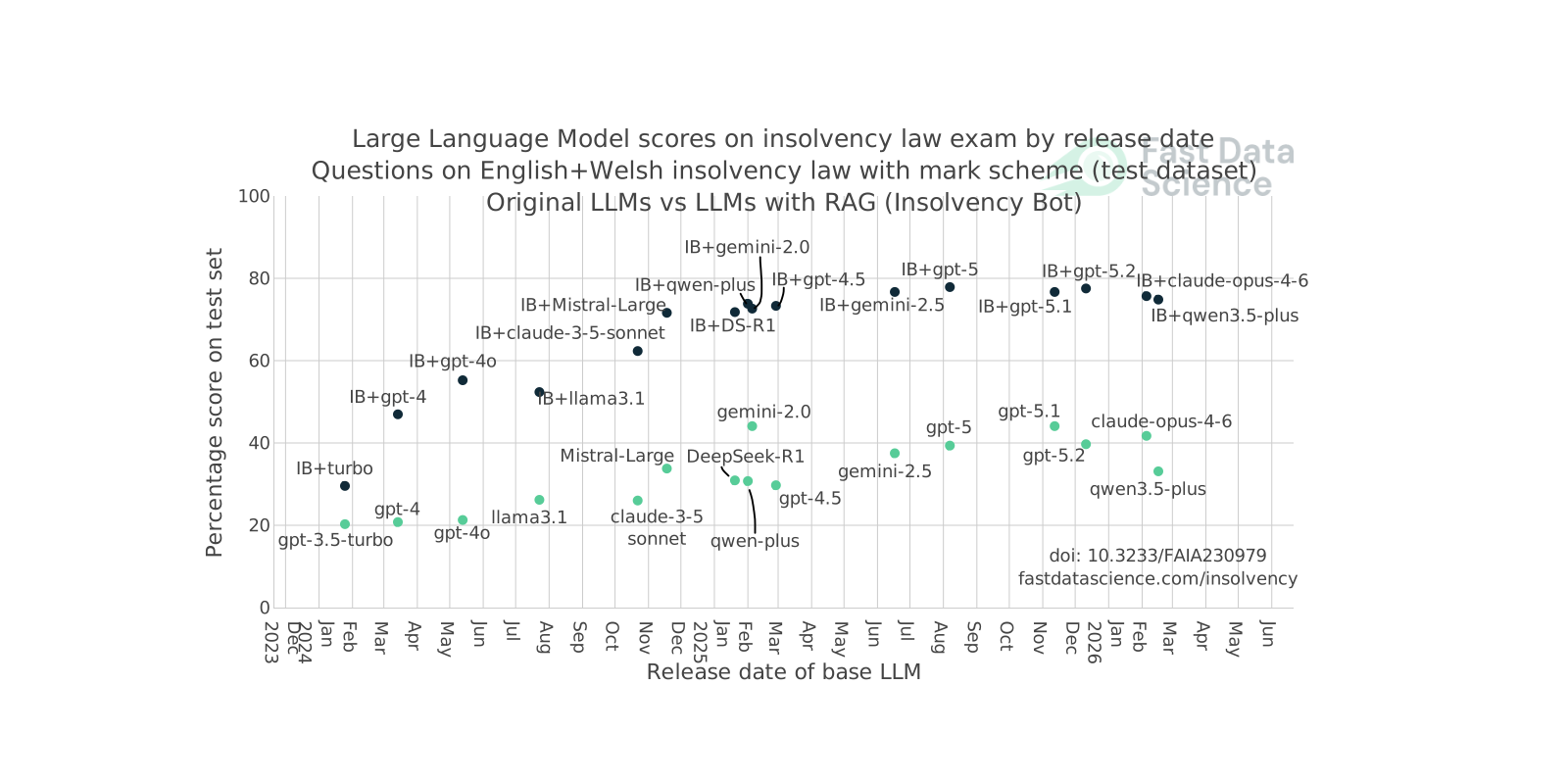
If you are interested in AI, you should attend specifically for the session, The role of artificial intelligence in investigations and the preparation of reports, where Thomas Wood of Fast Data Science will explore how expert witnesses can navigate the challenges posed by generative AI. Expert witnesses have been prominent in some recent cases involving AI, such as Getty Images vs Stability AI, where both sides instructed their own experts in a complex litigation involving questions around generative AI and copyright and trademark law, and there have been a number of recent cases in the UK, Ireland, and other jurisdictions, where litigants in person and even barristers have been admonished by judges for inappropriate use of generative AI and fake citations. Our recently published work on the Insolvency Bot has been an exploration into how retrieval augmented generation (RAG) can reduce the risk of hallucinations.
Ireland’s Expert Witness Conference 2026
The other speakers at Ireland’s Expert Witness Conference cover a range of legal, practical, and high-profile topics relevant to expert witness work both in Ireland and the UK:
Judge Michael Peart and President David Barniville will set the stage for the conference, with the former providing the chairperson’s opening remarks and the latter delivering the keynote address.
A highlight of the event is the talk by Mark McDonald, the barrister for Lucy Letby. Mr McDonald will talk on How expert witnesses have been central to the whole case and what lessons can be learnt.
James Nerney B.L. will provide crucial updates on recent developments in case law and legal trends that are relevant to expert witnesses’ practice.
Mary Cooney (Solicitor) and Hilary Cotter (Expert Witness) will offer a dual perspective on the practicalities of expert instructions and fees, clarifying expectations from both the legal and expert points of view.
John McLaughlin B.L. will focus on practical courtroom skills, presenting techniques for presenting evidence effectively and handling cross-examination, including a roleplay session.
In addition to the main speakers, the agenda includes a panel discussion on expert meetings and a dedicated session providing guidance on the expert’s report, with a particular focus on producing single joint reports.

Thomas Wood, Director of Fast Data Science, grew up in London, and studied physics as his first degree, and then did a masters in natural language processing in 2008 in Cambridge University. After finishing his studies, he moved abroad for a few years to Germany and then Spain, and worked for a number of small and large companies in data science and NLP, and AI gradually became a hot topic. Thomas returned to the UK in 2014 and in 2018, he founded Fast Data Science.
He now works on a number of consulting projects in pharmaceuticals as well as the Clinical Trial Risk Tool (https://clinicaltrialrisk.org/). In addition to projects in data science, he takes on expert witness and expert advisor consulting work in the UK and abroad, and he has completed the Bond Solon Expert Witness training for civil litigation in England and Wales.
Thomas Wood’s talk, The Role of Artificial Intelligence in Expert Investigations and the Preparation of reports, will cover the following topics:
| Time | Session Title | Speaker(s) |
|---|---|---|
| 09:15 | Registration | — |
| 09:25 | Introductions | — |
| 09:30 | Chairperson’s Opening Remarks | The Hon. Mr. Justice Michael Peart |
| 09:35 | Keynote Address | The Hon. Mr. Justice David Barniville, President of the High Court |
| 09:55 | Recent developments in case law and development relevant to expert witnesses | James Nerney B.L. |
| 10:30 | The Experts Instructions including clarification on what is expected around fees: An Expert Witness’ Perspective and a Solicitor’s Perspective | Mary Cooney, Partner, William Fry & Hilary Cotter, Expert in Assistive Technology |
| 11:15 | Q&A | — |
| 11:30 | Refreshment Break | — |
| 11:45 | Lucy Letby Case UK - How expert witnesses have been central to the whole case and what lessons can be learnt | Mark McDonald, Barrister for Lucy Letby |
| 12:20 | The role of artificial intelligence in investigations and the preparation of reports | Thomas Wood, Director of Fast Data Science Ltd |
| 12:55 | Lunch | — |
| 14:00 | The benefit of Expert Meetings (Panel Discussion) | The Honourable Mr. Justice Michael Peart: The Honourable Mr. Justice Bernard Barton; Mary Cooney, Partner, William Fry; Siobhan McSweeney, Expert Witness and CEO of MSC Case Management |
| 14:40 | The Expert’s Report and Single Joint Reports: A Judge’s Perspective | The Hon. Mr. Justice Bernard Barton |
| 15:15 | Techniques for presenting evidence effectively and handling cross-examination including a cross-examination roleplay | John McLaughlin B.L. |
| 15:50 | Q&A & Chair’s Closing Comments | - |
| 16:00 | End | — |
Looking for experts in Natural Language Processing? Post your job openings with us and find your ideal candidate today!
Post a Job
Unlock your business potential with expert AI consulting services from Fast Data Science. Discover strategies to accelerate growth and outperform competitors.
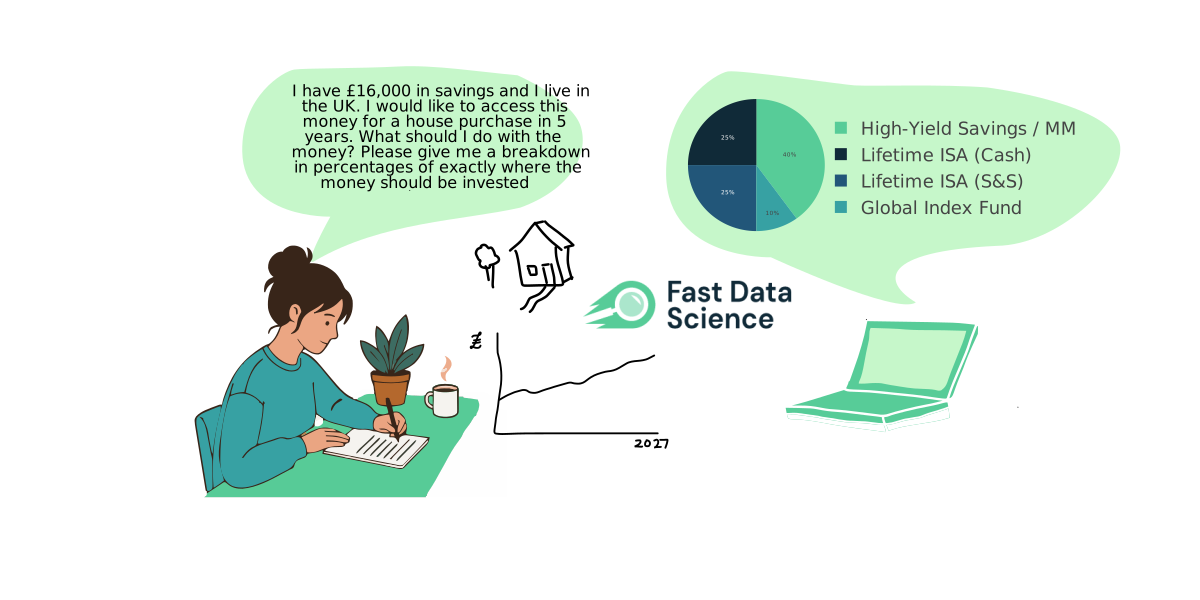
Financial advisors, like lawyers, are regulated in the UK. All financial advisors should be registered with the Financial Conduct Authority (FCA) and must have certain qualifications and have signed up to a code of ethics. UK financial advisors must also complete professional training every year.
What we can do for you